How to Convert a Bike to Electric: DIY Conversion Guide
How to Convert a Bike to Electric is a question many cyclists ask when they want the benefits of an e-bike without purchasing a completely new bicycle. Converting an existing bike can be a practical and cost-effective way to enjoy electric assistance for commuting, leisure riding, and longer journeys.
With the right conversion kit, battery, and a few basic tools, most bicycles can be transformed into capable electric bikes. However, choosing the correct components and understanding local regulations is essential before starting your project.
This guide explains everything you need to know about converting a bicycle into an electric bike safely and successfully.
What Is an E-Bike Conversion?
An e-bike conversion involves installing an electric motor, battery, and controller onto a standard bicycle.
The conversion system typically provides pedal assistance or throttle-powered riding depending on the kit selected.
Common bikes used for conversion include:
- Mountain bikes
- Hybrid bikes
- Commuter bikes
- Touring bikes
- Fat tire bikes
A quality conversion can dramatically improve riding comfort and reduce effort on hills and long rides.
Components Needed for an E-Bike Conversion
Most conversion kits include the essential components required to electrify a bicycle.
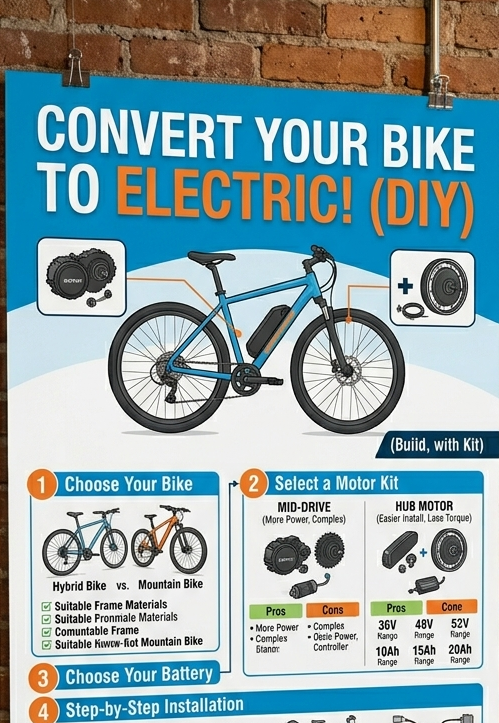
Motor
The motor provides power assistance while riding.
Common options include:
- Front hub motor
- Rear hub motor
- Mid-drive motor
Each system offers different advantages depending on riding style and terrain.
Battery
The battery stores energy and powers the motor.
Important considerations include:
- Capacity
- Voltage
- Range
- Weight
Higher-capacity batteries generally provide longer riding distances.
Controller
The controller manages power delivery between the battery and motor.
A quality controller improves efficiency and riding performance.
Display
Most systems include a display showing:
- Speed
- Battery level
- Distance travelled
- Power mode
Sensors
Pedal-assist sensors detect rider input and activate the motor accordingly.
Choosing the Right Conversion Kit
Not all conversion kits are the same.
Before purchasing, consider:
Riding Purpose
Will the bike be used for:
- Daily commuting
- Trail riding
- Leisure rides
- Long-distance touring
Terrain
Hilly routes often benefit from more powerful systems.
Battery Range
Choose a battery capable of supporting your typical riding distance.
DIY Conversion Step-by-Step
Step 1: Inspect the Bicycle
Ensure the bike is in good condition.
Check:
- Frame integrity
- Brakes
- Wheels
- Drivetrain
A conversion should always begin with a mechanically sound bicycle.
Step 2: Install the Motor
Depending on the kit, install the motor into:
- Front wheel
- Rear wheel
- Bottom bracket area
Follow the manufacturer’s installation instructions carefully.
Step 3: Mount the Battery
Most batteries mount on:
- The downtube
- Rear rack
- Frame triangle
Ensure the battery is securely attached.
Step 4: Install the Controller
Mount the controller in a protected location away from excessive moisture and impact.
Step 5: Connect Wiring
Connect:
- Battery
- Motor
- Display
- Sensors
Double-check all connections before powering the system.
Step 6: Test the System
Before riding:
- Verify motor operation
- Check brakes
- Test assistance levels
- Confirm battery charging
Common DIY Conversion Mistakes
Choosing the Wrong Battery
An undersized battery can significantly reduce riding range.
Ignoring Brake Upgrades
Additional power often requires better stopping performance.
Poor Cable Management
Loose wiring can create reliability and safety issues.
Buying Low-Quality Kits
Cheap components may result in reduced performance and durability.
Is It Better to Convert or Buy an E-Bike?
The answer depends on your goals.
Conversion Advantages
- Reuse an existing bike
- Lower upfront cost
- Customisable setup
- Personal satisfaction
Buying a New E-Bike Advantages
- Factory warranty
- Optimised design
- Professional assembly
- Integrated components
Many riders choose a conversion for flexibility, while others prefer the simplicity of a complete e-bike.
Browse complete electric bikes
European E-Bike Regulations
Before converting a bike, check local regulations regarding:
- Motor power limits
- Maximum assisted speed
- Road legality
- Helmet requirements
- Registration requirements
Rules vary across Europe and should always be verified before riding on public roads.
Accessories for Your Converted E-Bike
Popular upgrades include:
- Lights
- Mirrors
- Phone mounts
- Security locks
- Storage bags
Browse accessories we have available
Why Choose Coastline Ebike?
At Coastline Ebike, we help riders find quality electric mobility products designed for performance, reliability, and everyday use.
Explore our collections:
Learn more about us
Final Thoughts
How to Convert a Bike to Electric is a project that can transform an ordinary bicycle into a practical and enjoyable e-bike. By selecting the right conversion kit, battery, and components, riders can enjoy electric assistance without purchasing a completely new bike.
With proper installation and maintenance, a DIY e-bike conversion can provide years of reliable and efficient riding.